Subscribe by Email

Your email:

Follow the dentists and their dental thoughts on:

facebook dentist link

link to twitter dentist page

link to youtube dentist page

Dentistry in the News

Submit a link

Salt Lake City Dentist Blog

Current Articles | RSS Feed RSS Feed

Denture Adhesives and Concern for Health

 | Submit to Digg digg it | Submit to Reddit reddit | Add to delicious delicious | Submit to StumbleUpon StumbleUpon | Share on Facebook Facebook | Share on Twitter Twitter 

Of concern to many denture-wearing patients lately is their denture adhesives. Many denture adhesives contain zinc. Using denture adhesives improperly, by using too much adhesive, may lead to the ingestion of excessive zinc. Excessive zinc ingestion leads to lower levels of copper in the blood which may lead to nerve and blood disorders affecting general health and well-being. The relationship between using excessive zinc-containing denture adhesive and subsequent nerve and blood disorders is not completely clear and will require more research.

Improper use of denture adhesives generally means using too much. Denture wearers commonly use too much adhesive if their dentures do not fit well. Dentures should require very little adhesive to be stable. The use of a small amount of adhesive is very unlikely to result in nerve and blood disorders as the proper amount of adhesive contains less zinc than that found in a multivitamin or in 6oz of ground beef.

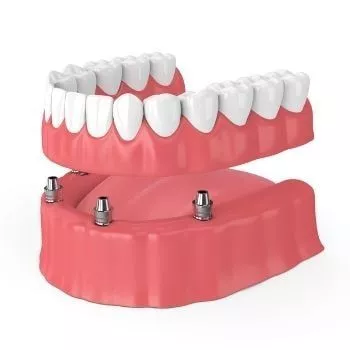
The American Dental Association has issued a statement regarding this concern. Patients who wear dentures are encouraged to see their dentist annually to screen for oral cancer and to ensure that their dentures fit properly. If you find that you must use adhesive to wear your denture comfortably, you might also consider dental implants as a means to stabilize your denture or even get rid of it all together. Until we know more, get your dentures checked for proper fit and look for a denture adhesive that does not contain zinc.

-----

Article, by Jonathan Campbell, DDS. Dr. Campbell is a dentist in Salt Lake City.

Teeth Whitening Additives-Can they help?

 | Submit to Digg digg it | Submit to Reddit reddit | Add to delicious delicious | Submit to StumbleUpon StumbleUpon | Share on Facebook Facebook | Share on Twitter Twitter 

Many things are added to teeth whitening gels. They are usually added to decrease sensitivity, or improve whitening results. We'll discuss what they are and if you should consider them.

  • Potassium Nitrate-This agent decreases sensitivity by temporarily affecting the nerve in the tooth. It is commonly found in sensitivity toothpastes. If you're teeth are sensitive prior to whitening or while whitening, you should definitely consider a whitening gel that has this additive.
  • Fluoride- Fluoride is generally added to whitening gels to decrease sensitivity. It works by creating assisting remineralization which blocks open channels to the nerves. I have not found it to be a very effective desensitizer. It will help if you are prone to cavities. So its not completely useless, but not necessary.
  • ACP (amorphous calcium phospate)- This molecule is readily used to block open channels to the nerves and can help with sensitivity and cavity prevention. It also makes teeth look shinier. It can be a helpful adjunct. ACP is also available, as Recaldent, separately in many chewing gums (Trident) and MI paste. Using these products can decrease your risk for cavities and tooth sensitivity.
  • Blue Covarine and other ingredients with optical properties-If you look at a color wheel the opposite of yellow is blue. So if you could somehow add a tinge of blue-purple to a tooth it would look whiter. The research seems to support this. This is usually not added to teeth whitening and bleaching gels but can be found in some toothpastes and in gels used after whitening to enhance the results.
  • Detergents-Detergents remove stains from teeth. They can be found in toothpastes and products like power swabs.

That's a lot of decisions to be made. What we all want is for the process to fast, predictable, and painless. With all of these additive options your dentist should be able to design a teeth bleaching process that meets those goals. However sometimes to get the teeth whitening results you want it will require veneers or bonding. Chemical teeth whitening can only do so much. In our next article, we'll discuss the options we offer in our office and what we've found works.

-----

Jonathan Campbell, DDS is a dentist in Salt Lake City. He and his partners offer cosmetic dentistry, sedation dentistry, implant dentistry, and general dentistry.

Salt Lake Dentist Discusses What Teeth Whitening Gel to Use

 | Submit to Digg digg it | Submit to Reddit reddit | Add to delicious delicious | Submit to StumbleUpon StumbleUpon | Share on Facebook Facebook | Share on Twitter Twitter 

In the last post on teeth whitening, you hopefully learned why you should consider carbamide peroxide vs hydrogen peroxide. In general, carbamide peroxide is a better choice for at home whitening.

Depending upon the manufacturer, carbamide peroxide is available in many different strengths. So which one should you choose? I will use Ultradent's product line because they are a Utah company and the owner, Dan Fischer, is a Salt Lake City dentist, that got his start in the same professional office building where we are located. So we have some allegiance. Though many other companies offer similar concentrations and products.

Opalescence Teeth Whitening Gels come in 4 different strengths: 10%, 15%, 20%, and 35%. Choosing your strength depends on how you plan on using your trays. The most effective way to whiten is with a custom made dentist tray worn while sleeping. While sleeping you make less saliva. Saliva will rinse away the whitening gel. If you can see yourself, sleeping with a tray, then you should consider 10-15% strength as it will allow you to whiten overnight without burning your gums.

On the other hand if wearing the trays at night isn't likely to happen then 20%-35% should be used. 20% is designed to be worn for 2-4 hours, and 35% is designed to be worn for 30 minutes. Personally, I really like the idea of wearing the trays the 35% for 30 minutes, but have found that after 30 minutes I get some irritation of my gums.. So I stick with 20 minutes and it seems to work well without the irritation.

In our next article, I'll talk about some of things that are added to whitening gels.

----------

This article was written by Jonathan Campbell, DDS. Dr. Campbell is dentist in Salt Lake City.

What This Salt Lake Dentist Learned at the Utah Dental Assoc. Meeting

 | Submit to Digg digg it | Submit to Reddit reddit | Add to delicious delicious | Submit to StumbleUpon StumbleUpon | Share on Facebook Facebook | Share on Twitter Twitter 

The next topic was going to be selecting teeth whitening concentrations. I still plan on getting to that. But first I wanted to share the events of the past few days at the Utah Dental Association. It is always fun to see all the dentists from Salt Lake City and the surrounding areas and my friends from dental school, see what new products and services are being promoted, and finally to spend a few days away from the office in class learning about something new.

The first day I attended a lecture on cosmetic dentistry. It was well done and I was happy to have reinforced that the way I approach cosmetic dentistry  is the same way this well-respected dentist approaches cosmetic dentistry. I learned a couple little tweaks to what I'm currently doing that I might consider on my next case. The one thing that was reinforced over and over was the importance of planning and provisionals. Most patients are anxious to get it done and over with. But he shared multiple examples where the planning was abbreviated or attention to detail on the the provisionals/temporaries were skipped and the results were less than what the patient wanted. I've been working on an informational page for patients on things to consider when considering cosmetic dentistry

The second day I attended a lecture about dental implants. It was good, but it seemed the person teaching really just wanted to sell us a specific brand of implant and dental laser. We spent some time in the afternoon looking at some new products. One that I am particularly interested in using is called Canker Complete.  It is an ointment that is applied to mouth sores, like cankers, that will decrease pain and speed healing. I have many patients that get these types of sores and I look forward to having one more thing to offer them. We also spent some time upgrading some of our dental hygiene equipment to make cleaning visits even more predictable and comfortable.

 It was a good meeting. Lots of great dentists in Utah. I look forward to getting back to work on Monday to implement some of what we learned.

Tooth Whitening, What Whitening Gel Works Best?

 | Submit to Digg digg it | Submit to Reddit reddit | Add to delicious delicious | Submit to StumbleUpon StumbleUpon | Share on Facebook Facebook | Share on Twitter Twitter 

There are dozens of different whitening gels available over the counter and at yourTooth Whitening Gel dentist's office. How are they different? How should you or your dentist choose one gel over another? This blog aims to answer those questions.

 Carbamide Peroxide or Hydrogen Peroxide?

Whitening gels active ingredients are either Carbamide Peroxide or Hydrogen Peroxide. The active whitening agent in both gels is hydrogen peroxide. Carbamide peroxide works by breaking down to hydrogen peroxide. So why not just get a whitening gel with hydrogen peroxide? One reason is that the shelf life of hydrogen peroxide is shorter. Further, carbamide peroxide breaks down slowly to hyrdrogen peroxide so using carbamide peroxide is like using a time release whitening gel. This is helpful for those patients that want to whiten at night. Whitening at night, is more effective as you produce less saliva to rinse out or dilute whitening gel.

So you should use carbamide peroxide if you plan or are able to whiten at night and hydrogen peroxide if you plan or have to whiten during the day. One thing to remember is to check the expiration date. Whitening gels, especially the hydrogen peroxides, are agents where they really become less effective the longer they've set on the shelf. Ideally, peroxides would remain refrigerated to preserve effectiveness. Your dentist is best equipped to help you make this decision.

 Up Next: What Percentage of Tooth Whitening Gel Should You Use?

Does Tooth Whitening Make Your Teeth Sensitive?

 | Submit to Digg digg it | Submit to Reddit reddit | Add to delicious delicious | Submit to StumbleUpon StumbleUpon | Share on Facebook Facebook | Share on Twitter Twitter 

People with white smilesWhy does teeth whitening make your teeth sensitive?

Teeth are like an M&M. They have a hard outer layer called the enamel and a softer layer inside called the dentin. Dentin has nerves. Exposed dentin is sensitive. Tooth whitening temporarily makes enamel more permeable microscopically exposing dentin.

Also teeth whitening trays can put orthodontic forces on your teeth making teeth sensitive. If you have ever worn braces, you know that it made your teeth sore. Whitening trays do not move teeth, bu they do apply pressure. That pressure can make teeth sore.

Whitening gels can cause chemical burns on gums. If a tray is poorly fabricated it will allow the whitening gel to leak out and onto the gums causing irritation.

The good news is that many of these causes of tooth whitening sensitivity are preventable, treatable, and reversible.

How do I prevent or treat tooth whitening sensitivity?

The first thing is to treat any tooth sensitivity prior to beginning whitening. If your teeth are already sensitive, tooth whitening will likely make it worse. Your dentist can help to identify why your teeth are sensitive and treat them accordingly. Common causes include exposed dentin from gum recession or tooth wear, cavities, and clenching or grinding your teeth.

2 of the causes of whitening sensitivity, pressure from the whitening tray and gum irritation, are caused by a poorly fitting tray. Making a well fitting tray requires an accurate impression and model, and attention to detail in the fabrication process. An over-the-counter do-it-yourself tray will whiten your teeth, but you can expect more sensitivity because of the less than perfect fit.

Tooth whitening will temporarily cause microscopic exposed dentin. This is reversible. Once you stop whitening the sensitivity will go away. But while whitening you can use these strategies to alleviate sensitivity:

  • a NSAID medication like ibuprofen taken prior to each whitening session will help
  • consider wearing your trays for a shorter period of time or using a lower concentration of whitening gel
  • use a desensitizing toothpaste that contains potassium nitrate, Sensodyne is an example
  • use a dentist dispensed product like MI paste or others to block exposed dentin between whitening procedures

Talk to your Dentist

Most of the sensitivity caused by tooth whitening is preventable and treatable. Your dentist should be able to help guide you through the tooth whitening process comfortably.

---

The Salt Lake City dentists at Legacy Dental offer tooth whitening including; at-home tooth whitening, in-office tooth whitening, and Kor Whitening deep bleaching.

Did the Dentist Tell You to Brush & Floss and You Still Got Cavities?

 | Submit to Digg digg it | Submit to Reddit reddit | Add to delicious delicious | Submit to StumbleUpon StumbleUpon | Share on Facebook Facebook | Share on Twitter Twitter 

"But I brush and floss every day." 

I hear it almost every day when I have to tell a patient that they have a cavity. We both feel bad. My patient feels like there's nothing they can really do to prevent cavities. I, their dentist, feels like I'm giving them bad news or news they weren't expecting.

So what's happening and can we do anything to stop it?

Cavities are formed when the pH (acidty) on the tooth is less than 5.5. The lower the pH number the more acidic. There are many foods and drinks that are acidic. Soda pop, fruit juices, and sports drinks, even the diets ones are very acidic. But more damaging is the acid caused by the bacteria that may live in your mouth. There are thousands of them. What we are learning is that people that get cavities despite their best efforts oftentimes have more of these acid-producing bacteria than other people. An interesting thing about these acid-producing bacteria is that they thrive and increase in numbers the more acidic the environment.

Some might say, "Just clean them off with brushing and flossing." The problem is that within minutes the bacteria are back on the teeth. Brushing and flossing for some is not enough.

So what can be done? The first thing is to find out if you have the infection that causes cavities. This is done by rubbing a swab on your lower teeth and placing it into a special meter. If theCavity Meter test indicates that you have the infection, then the infection should be treated. The infection can be treated with a combination of very specific mouthrinses, sprays, gums, and toothpastes used for a specific length and amount of time. After 3 months, another test is performed to see if the infection is still present. If the infection is cured, then a preventive regimen is continued.

Early results show that people that seemed to get cavities at every check-up now are finally cavity free. Now that's something to smile about!

----------------

The dentists at Legacy Dental, in Salt Lake City can perform this test and help you to treat the cavity infection you have. For a limited time we will perform the test for only $5. 


The power of a smile, Do you need cosmetic dentistry?

 | Submit to Digg digg it | Submit to Reddit reddit | Add to delicious delicious | Submit to StumbleUpon StumbleUpon | Share on Facebook Facebook | Share on Twitter Twitter 

Young Girl with Great SmileThis forum on linkedIn discusses the importance of a smile in sales and I would add life. One of the common things people worry about is whether their smile might detract from their appearance.

One of the things you'll notice, if you look at a lot of teeth, is that most celebrities and people that we consider beautiful do not have perfectly straight teeth. You can see some really bad examples here. Their lack of perfection in the pearly white department does not seem to detract from their ability to succeed in professions where image is most everything.

A Frank Spear study found that there are some specific things that are definitely noticed by most people and can make your smile be a liability rather than an asset. What follows are the key smile indicators that people noticed.

  1. Are all the teeth that show the same color or shade? A dead tooth or a tooth with a poorly done crown or an old crown can really stand out. Making a single tooth match or masking a dark tooth can be a very challenging dental problem. But the right dentist and lab technician can overcome that.
  2. Are the teeth light in color, but not too light? This can be a little tough to judge. As for too light, your teeth should not be lighter than the whites of your eyes. When you smile people should notice your eyes first and then your smile. If your smile is too white, it looks unnatural. As for too dark, dentists use a shade guide to match dental restorations.Dental Shade Guide If your teeth are in the top half of the guide, your teeth are not too dark to detract from your appearance.
  3. Do you show to much of your gums when you smile? Generally you should show a little less than 1/4" of gum tissue when you smile. If you show more it can detract from your appearance.
  4. Do your teeth follow the shape of your lower lip when you smile? They should your teeth should have curve similar in shape to your lip. If they curve the opposite direction it can look like you're frowning or mad even when you're smiling.
  5. Do you have any gaps between your teeth especially your front teeth or are you missing any teeth that are visible when you smile? People when asked to evaluate a person's intelligence based only on photos always ranked those with gaps between their front teeth and missing teeth as less intelligent. Lauren Bacall and David Letterman manage to pull off the "gappy" smile. But they aren't being asked to be considered intelligent.

Those are the main things people notice. A person can get away with a little crowding, teeth that are worn, other small defects, or teeth that aren't neon white and no one is likely to notice. But if you suffer from one of these "noticeable" smile defects, it may hurt your image and other's perception of you. Cosmetic dentistry can help.

-------------

Email (info@legacydental.com) us a close-up and we'd be happy to rank your smile and make some recommendations. The dentists at Legacy Dental in Salt Lake City, would be happy to answer any cosmetic dental questions you may have.

Dental Emergencies First Aid by a Salt Lake City Emergency Dentist

 | Submit to Digg digg it | Submit to Reddit reddit | Add to delicious delicious | Submit to StumbleUpon StumbleUpon | Share on Facebook Facebook | Share on Twitter Twitter 

Woman with a toothacheToothaches and abscessed teeth can be nearly impossible to ignore and your best bet is to see an emergency dentist as soon as possible. However, sometimes it can be difficult to make arrangements to be seen right away. So what can you do?

  1. Clean the area well with warm salt water rinses. Floss and brush carefully.
  2. If there is a broken tooth cover the broken area. You can use a temporary filling from the drugstore, or a soft wax.
  3. Take an anti-inflammatory medication like ibuprofen. If the ibuprofen is not enough take some acetaminophen as well. Make sure to ask your pharmacist if these medications are safe for you to take. Combined ibuprofen and acetaminophen make a pretty good pain reliever.
  4. Use Anbesol, OraJel, or Benzocaine. These are anesthetic gels that can numb the area. They are similar to what the dentist might use prior to giving an injection. Don't place aspirin on the gums it will create a burn and will not provide pain relief.
  5. Experiment with different temperature liquids. Some toothaches are soothed by warm liquids others by very cold liquids. Oviously, if the tooth has been sensitive to cold, don't use cold liquids and if it has been sensitive to hot don't use warm liquids. But if it has not been particularly sensitive to variations in temperature, you may find that bathing or rinsing with warm or cold liquids may temporarily relieve the pain from your toothache.
  6. Try moist heat applied over your cheek or jaw. The best way to do this is to run warm water over a washcloth and then apply to the area.
  7. Try a cold pack or ice pack. Cold can numb the area.
  8. If you have swelling, you should be seen right away. Swelling from an abscessed tooth can become life threatening and require hospitalization. 

Those are the techniques I would recommend. The main thing is to see a dentist. Pain is a sign from the body that something is not right. Even if your toothache goes away on its own, without treatment it will come back, and the damage may be even more extensive.

-------------

The emergency dentists at Legacy Dental, in Salt Lake City, UT are on-call 24 hours a day 7 days a week. We always have same day dental appointments and will make every effort to see you as soon as possible. We'd love to help you.

Sedation Dentistry

 | Submit to Digg digg it | Submit to Reddit reddit | Add to delicious delicious | Submit to StumbleUpon StumbleUpon | Share on Facebook Facebook | Share on Twitter Twitter 

Only 50% of adults see the dentist regularly. A large portion of those avoid regular dental care due to anxiety and fear caused by previous dental appointments. There are many things about dental care that can cause anxiety; media portrayal of dentists, sounds, smells, injections, the close proximity, etc. etc. 

Most dental offices are trying to change or have already changed that experience. Many dentists offer: televisions in the ceilings with movies and headphones, comfortable dental chairs and blankets, drills that make less sound or air abrasion or lasers that make no sound at all, aromatherapy, and new techniques to get you numb and make sure you are numb.

Even still there are many whose negative history of dental experiences need more help. There are 4 main methods of sedation that are commonly used to make dental appointments easier. They are, nitrous oxide sedation, oral conscious sedation, intravenous conscious sedation, intravenous deep sedation.

Nitrous oxide dental sedation is administered through a small mask that rests on your nose. A mixture of nitrous oxide and oxygen flows through the mask. Within minutes you feel more relaxed, time seems to pass more quickly, and you may feel warm and happy. Occasionally your arms and legs might feel heavy and toes and fingers might feel tingly. It is sometimes called "laughing gas" because of the good feelings that most experience. Following your appointment, you breathe pure oxygen for a few minutes and you are safe to drive as the "relaxing gas" takes only a few minutes to wear off. So what's the downside, if you are given too much nitrous oxide in the mixture for too long you may become nauseous. Nitrous oxide will not make you forget or fall asleep.

Oral Sedation DentistryOral conscious sedation dentistry involves the use of medications that are taken usually one hour prior to your dental appointment. You are given a ride yo your appointment. Oftentimes additional medication may be given in the office, depending upon how comfortable you are. The most commonly used medications are benzodiazepenes, like Valium, Halcion, and others. These medications are commonly used as sleeping pills and so many patients sleep through portions of their appointments.  They also cause amnesia and so many dental patients remember little if any of their dental appointment. Your pulse, blood pressure, and breathing should be monitored during the procedure. Following the procedure, your escort will drive you home and stay with you for a few hours after your procedure to make sure you recover safely.

Intravenous conscious sedation is very similar to oral conscious sedation except an IV is placed. Having an IV in place allows the sedation dentist to easily deepen the level of sedation if needed, it also allows for a more precise dosage to be administered, but otherwise the sedation effects are very similar to oral conscious sedation.

Deep intravenous sedation dentistry is usually provided by a dentist anethesiologist or an oral surgeon. This form of dental sedation results in a patient that is completely sedated. You will be asleep for the entire procedure, and you will not remember the procedure. Like conscious sedation you will need a ride to and from the appointment and someone to watch you for a few hours while you recover.

So which form of dental sedation should you choose? It depends on your level of anxiety, budget, and the dental treatment planned.

  • Do you want to be relaxed or asleep? If your answer is "asleep," deep sedation would be preferrable.
  • Is it ok if you might remember portions of your dental appointment or do you want to have no memory of your visit? If you answer is, "no memory," then deep sedation would be preferrable.
  • Deep sedation is more expensive than other forms of sedation. Dental insurance generally only covers sedation if removal of wisdom teeth are involved. So cost can become a deciding factor. Most dentists offer financing plans so that costs can be arranged to fit your budget.
  • It also may depend on what dental treatment is needed. If you need only minor care, nitrous oxide may be successful. If your needs are more complex or involve surgery, a deeper sedation may be indicated.

Together, you and your dentist, can decide on the best type of sedation dentistry for your concerns and needs. The important thing is that you know that there are alternatives to suffering with poor dental health and dental phobias. With sedation dentistry many people are now able to smile confidently and eat comfortably after years of neglect.

- - - - - - - - - -

At Legacy Dental, in Salt Lake City, Utah, the dentists offer all forms of sedation dentistry. We are always concerned about your comfort. Please comment below or call us if you have any questions about how sedation dentistry may benefit you or someone you know.


All Posts