Posted by Jonathan Campbell on Tue, Aug 10, 2010 @ 01:22 PM
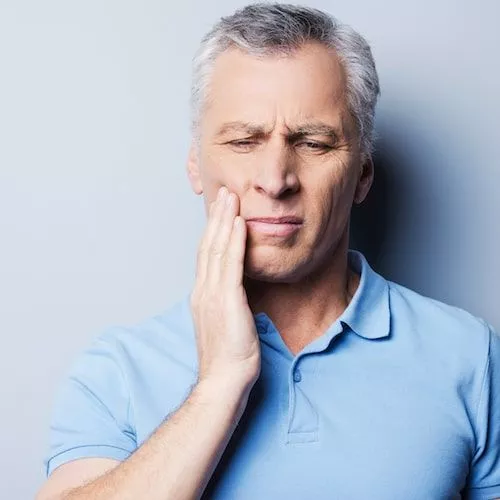
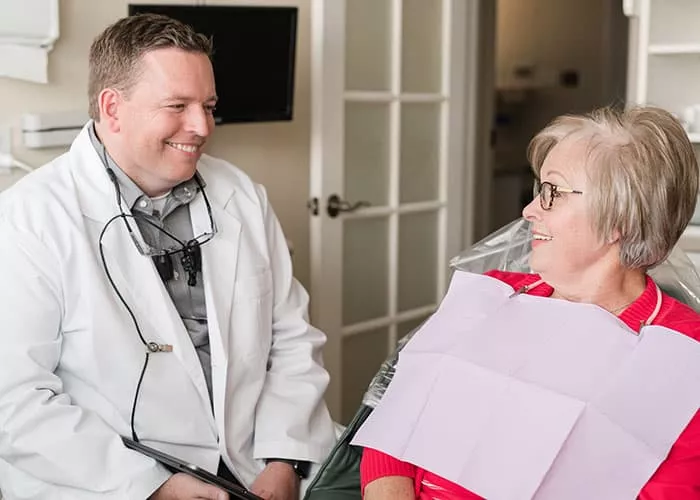
If you get nervous about visit to the dentist, you're not alone. An estimated 35 million adults experience anxiety at thought of a dental visit. But there are a few things that you might consider to make your care more pleasant and pain free.
- Share your feelings with the dentist. By bringing your fears out in the open, you'll gain control of them.
- Set aside a stress-free time for your dental visit when you won't feel rushed or troubled by other concerns. An early morning visit or a visit on a Saturday might be less stressful than rushing in to see us after work.
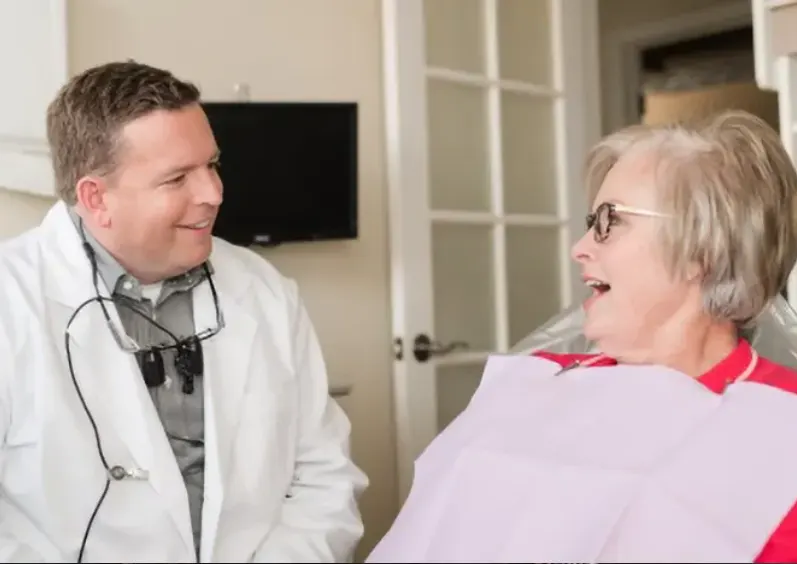
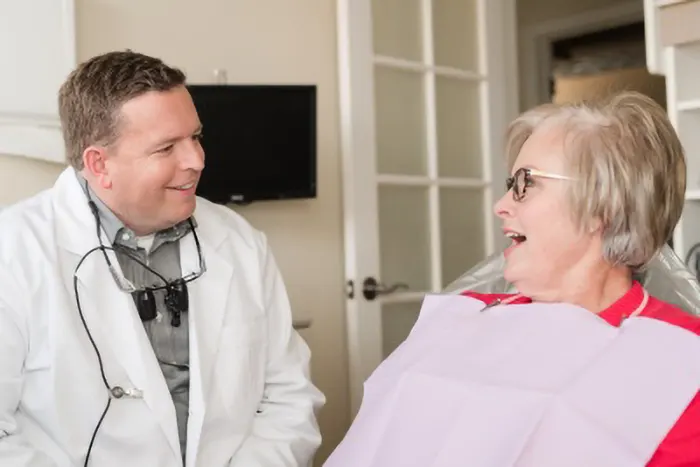
- During your visit practice relaxation techniques like focusing on pleasant distractions and focusing on deep slow breathing. That's why we have televisions and movies. They are an incredibly helpful distraction.
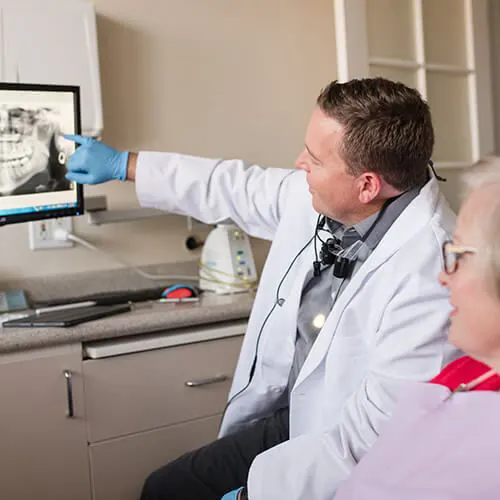
- Ask the dentist to explain each step and what to expect to feel. Knowing what's coming and what you might feel can relieve your anxiety.
- Get a good night's sleep and eat a light breakfast. Wear comfortable clothes. Consider scheduling shorter appointments. If you're feeling any discomfort, signal the dentist. A concerned dentist will stop immediately and address your discomfort.
- Consider sedation dentistry. Nitrous oxide is a very light form of sedation that can make your dental visit very pleasant. Oral conscious sedation and deep IV sedation can also be considered.
The main thing to know is that it's normal. Using modern techniques a trip to the dentist really can be relaxing and maybe even something you come to look forward to.
---
Jonathan Campbell, DDS, FAGD is a dentist at Legacy Dental, in Salt Lake City. He provides sedation dentistry and he and his team pride themselves in helping fearful patients to comfortably receive the dental care they need.
Posted by John McTigue on Wed, Jul 21, 2010 @ 09:37 AM

On July 10th, in New Orleans, Galen Campbell and Jonathan Campbell, along with 334 dentists from around the world, were awarded fellowship in the Academy of General Dentistry (FAGD). This award recognizes dentists that have completed over 500 hours of continuing education in varied disciplines of dentistry and passed a rigorous dental examination. Only 7% of dentists in North America have earned this prestigious award. The Academy of General Dentistry promotes the interests of general dentists and their patients through education, advocacy, and achievement. They look forward to continuing to learn about the latest techniques and procedures for the benefit of their patients and colleagues. They are both dentists in Salt Lake City, Utah.
Posted by Jonathan Campbell on Wed, May 12, 2010 @ 10:05 AM
Jessica Simpson, the dimwitted sometime pop, sometime country singer who gained fame as America's favorite simpleton on her reality show, The Newlywed's is at it again. I forgave Jessica for not knowing that Chicken of the Sea was really tuna fish, but I don't think I can forgive her horrible oral hygiene.
In March, Simpson admitted her oral indiscretions, "I don't brush my teeth," she told a radio station "No, really! I just use Listerine -- and sometimes I'll use my sweater," she claimed, bursting into laughter. Motioning that she uses her sweater stretched over her finger as a make shift toothbrush.
Ewww!!!! disgusting. Why would a lovely, famous, single young women admit to such a thing? That is a question this dental hygienist can not answer. Outside of running the risk of losing friends to halitosis, what is the problem with Simpson's hygiene habits? The very short and simple answer, bacterial plaque (food debris) left on your teeth can lead to cavities and gingivitis. A wipe of your sweater may be able to remove some of the "fur" that you feel on your teeth but adequate removal of plaque is achieved when two minutes are spent brushing and with daily flossing. Listerine is helpful in removing plaque when rinsed vigorously and does have properties that decrease the bacteria that cause gingivitis but it does not take the place of regular brushing and flossing. Simpson is lucky enough to have good genetic dental genes on her side. Her dentist admitted being surprised by her lack of care. How can that be? She likely responds differently to cavity causing and periodontal causing bacteria. I doubt that luck with last forever. So make it part of your daily routine to be smarter than Jessica Simpson. See your dentist twice a year, floss daily and brush with a toothbrush, not cashmere.
Article by Cori Skiby, RDH. Cori is a dental hygienist at Legacy Dental in Salt Lake City. She is well known for her vast knowledge of pop culture and more importantly for being an excellent dental hygienist.
Posted by Jonathan Campbell on Sun, Apr 18, 2010 @ 11:04 AM
Stress is an issue everyone deals with to some degree on a daily basis, but with economic down turn the level of stress in our society has risen. Clenching is when a person puts force on the temporomandibular joint (TMJ) muscle and bites their teeth together with great force. Grinding or bruxism is when a person puts their teeth together and moves the jaw from side to side or front to back. Clenching and grinding are un-natural positions for the mouth to be in when not chewing. Many of our patients are unaware they have an issue with clenching or grinding their teeth because most people are forming these habits at night when sleeping. Stress can greatly increase these habits not only at night but during the day.
Clenching and grinding the teeth can cause a number of problems in the mouth including; fractures in the teeth, wearing of enamel, breaking of restoration in the mouth, and TMJ pain. To help this problem it is a good idea to get checked by a dental professional to see if you are clenching or grinding your teeth. Some symptoms are; wear or appearance of shorter teeth in some areas, unexplained sensitivity, broken fillings or crowns, soreness in the jaw or frequent headaches. In our office we treat this issue depending on the severity of the problem.
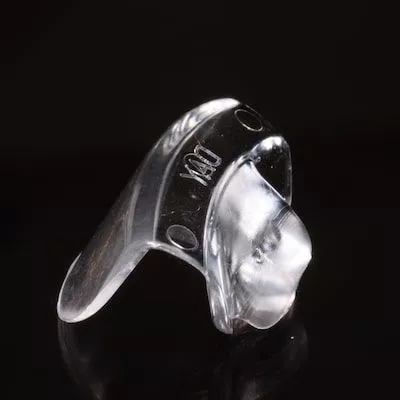
Many of our patients with these issues are wearing an NTI at night or during the day. An NTI is a device that fits over two front teeth. While wearing this device you are unable to put force on the front teeth relieving pressure on the joint and ultimately decreasing the ability to clench or grind your teeth. It is about the size of quarter and is much more comfortable to wear than full mouth guard. Many of our patients wear this device to not only relieve clenching and grinding, but also to relieve frequent headaches and migraines.
-----
Article by Katie Poulsen, RDH, BS. Katie is a dental hygienist at Legacy Dental in Salt Lake City, Utah.
Posted by Jonathan Campbell on Fri, Apr 16, 2010 @ 12:57 PM
Last year Americans spent 25% less on dental care than the year before. Many view dental treatment as elective, especially cosmetic dentistry, like tooth whitening, veneers, and braces. Treatment of common dental diseases should not be delayed. Cavities and gum disease if allowed to progress are more expensive to treat and can cause pain and discomfort that can lead to unexpected absence from work. But what about a less than perfect smile? Can it wait?
Diane Umansky, in First for Women, reports that "Smiling helps individuals present a positive image to others, allowing them to gain more respect. Smiling also helps calm the body and make more resistant to stress and pain. In addition, it promotes an overall positive feeling which allows people to find more enjoyment in all their activities." 90% if people rank the appearance of a person's teeth as very important. So arguably a smile that you can be proud of should not wait. But cosmetic dentistry can be expensive.
That's why its important to identify the specific things that need to be changed and to make the improvements needed to have a smile that adds and doesn't detract from your appearance. Generally people notice teeth that are very yellow, a tooth that is not the same color as its neighbors, a missing tooth, and teeth that are very crowded or have gaps. While full-on veneers or braces might be the best way to solve these problems. There are alternatives.
Teeth whitening, even over the counter, can lighten your smile inexpensively. Bonding can, can change the shape of teeth. Reshaping the teeth can help. Maybe just doing 1 or 2 veneers instead of 8 or 16 might be enough to make the difference. The point is you can make some simple changes that can make a big improvement for not too much money.
---------
Jonathan Campbell, DDS, is a dentist in Salt Lake City. His practice continues to thrive in this challenging economy. Part of that success is being able to help many patients achieve a more attractive smile relatively inexpensively.
Posted by Jonathan Campbell on Tue, Apr 13, 2010 @ 12:48 PM
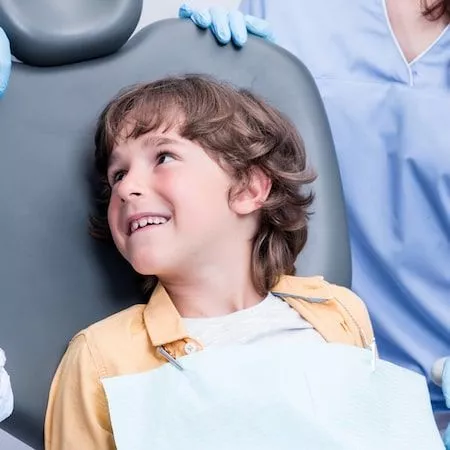
Sedation dentistry for children is needed for the following reasons:
- Child is afraid or uncooperative
- Child has many problems requiring an extended treatment time
The following options exist for sedation dentistry for children:
- An oral medication is given 30 minutes to an hour prior to treatment and your child will feel relaxed, forgetful, and maybe a little sleepy
- An anesthesiologist comes to the dentist's office and provides IV sedation
- Your child and the dentist go to a hospital and the dentistry is done in an operating room
Together, you and your child's dentist can decide on the most suitable form of sedation.
Many parents express concern about the safety of sedation dentistry and also the cost. First, sedation dentistry is very safe and has a long track record of safety. The cost for sedation dentistry varies depending upon the method used and the dentist. Sometimes insurance will pay for the costs of sedation dentistry. Some parents might wonder, "What's the big deal, they're just baby teeth."
Taking care of baby teeth or primary teeth is important for the following reasons:
- Healthy baby teeth are needed to chew properly. Children with broken and missing baby teeth may have difficulty eating many nutritious foods, like fruits, vegetables, meats, and nuts.
- Cavities in baby teeth can cause pain that interferes with a good nights rest. This can lead to a child that has difficulty in school and possibly other behavioral problems.
- Healthy baby teeth are needed to maintain the space for permanent teeth. If baby teeth are lost too early, the space for the permanent tooth will shrink. When its time for the permanent tooth to come in there may not be room. Braces may be needed for a longer time.
- Cavities in baby teeth can lead to serious infections, that can even be life-threatening.
As you can hopefully see, those baby teeth are very important. Providing the necessary dental care for your child might require sedation. That's o.k. In the future,they'll be a better dental patient after a positive dental experience.
-------
Article written by Jonathan Campbell, DDS. Dr. Campbell is a dentist in Salt Lake City who offers sedation dentistry to adults. While he really enjoys working on kids, if your child has extensive needs or requires sedation, Dr. Campbell feels these children would be best served by a pediatric dentist. If you need a referral, he'd be happy to make one.

Posted by Jonathan Campbell on Mon, Mar 22, 2010 @ 07:10 PM
There is a lot of attention and promotion of dental implants in Salt Lake City. Recently an oral surgeon and prosthodontist have been advertising heavily in the newspaper and on television that they are offering these services here in Salt Lake. I think it's great. Many patients are unaware that they do not need to suffer with missing teeth or dentures. I'd like to discuss the process dental implants and what you can expect.
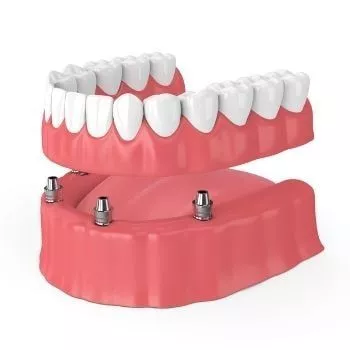
Dental implants allow us to permanently replace missing teeth, by anchoring the teeth, crowns, or dentures to the jawbone just like a natural tooth is anchored to the jawbone by a root. Dental implants have been around for a long time and are predictable. Dental implants can be used to replace one tooth, a few teeth, or many teeth. I'd like to discuss the use of dental implants to replace all of a person's teeth and specifically this idea of teeth in an hour or in a day.
A few years ago, using dental implants to replace teeth required many months of waiting for healing before being able to have permanent teeth. Changes in dental implant design and understanding has now allowed us to shorten the time from placement of implants to attachment of teeth to a few hours. It's pretty awesome.
I think its important to understand that there are some initial appointments to plan and prepare for the day of the implant placement. Also the teeth placed on day of the implant placement are generally designed to serve as a temporary while waiting for complete healing. Although many patients enjoy there temporary so much, they decide they do not need to proceed with a different restoration.
This kind of dentistry can be expensive. You should expect that it will cost about the same as a new car. Most offices (ours included) can set up payments. But when spending this much money its important to make sure that there is a clear plan in place to avoid any surprises. This kind of dentistry is life-changing. Patients can eat normally, and smile confidently. It can make a huge difference.
-------
This article was written by Jonathan Campbell, DDS. He is a dentist in Salt Lake City. At his office, Legacy Dental, he offers dental implants to replace one tooth or many teeth.
Posted by Jonathan Campbell on Sun, Mar 14, 2010 @ 11:39 AM
Fluoride has long been a part of children's dental appointments, but did you know that the latest research suggests that it offers many benefits to adults as well?
Fluoride makes your teeth stronger. This makes them more resistant to cavities, less sensitive, and can even reverse or heal cavities that are just getting started. Fluoride also makes bacteria produce less acid. Regular applications of fluoride have shown to reduce the risk of getting a cavity by as much as 75% and can reduce sensitivity for up to 6 months.
The best way to apply fluoride is with a varnish at the dentist. Fluoride varnish is a pleasant tasting material that is painted on your teeth. It sets in seconds and there are no eating or drinking restrictions, but you are advised to wait to brush for 4 hours. Everyone can benefit from fluoride application, but adults that are at moderate risk should have fluoride applied every 6 months.
------
This article was written by Cori Skiby, RDH. Mrs. Skiby is a dental hygienist at Legacy Dental, in Salt Lake City, Utah.
Posted by Jonathan Campbell on Tue, Mar 09, 2010 @ 11:04 AM
Of concern to many denture-wearing patients lately is their denture adhesives. Many denture adhesives contain zinc. Using denture adhesives improperly, by using too much adhesive, may lead to the ingestion of excessive zinc. Excessive zinc ingestion leads to lower levels of copper in the blood which may lead to nerve and blood disorders affecting general health and well-being. The relationship between using excessive zinc-containing denture adhesive and subsequent nerve and blood disorders is not completely clear and will require more research.
Improper use of denture adhesives generally means using too much. Denture wearers commonly use too much adhesive if their dentures do not fit well. Dentures should require very little adhesive to be stable. The use of a small amount of adhesive is very unlikely to result in nerve and blood disorders as the proper amount of adhesive contains less zinc than that found in a multivitamin or in 6oz of ground beef.
The American Dental Association has issued a statement regarding this concern. Patients who wear dentures are encouraged to see their dentist annually to screen for oral cancer and to ensure that their dentures fit properly. If you find that you must use adhesive to wear your denture comfortably, you might also consider dental implants as a means to stabilize your denture or even get rid of it all together. Until we know more, get your dentures checked for proper fit and look for a denture adhesive that does not contain zinc.
-----
Article, by Jonathan Campbell, DDS. Dr. Campbell is a dentist in Salt Lake City.
Posted by Jonathan Campbell on Sun, Mar 07, 2010 @ 11:04 AM
Many things are added to teeth whitening gels. They are usually added to decrease sensitivity, or improve whitening results. We'll discuss what they are and if you should consider them.
- Potassium Nitrate-This agent decreases sensitivity by temporarily affecting the nerve in the tooth. It is commonly found in sensitivity toothpastes. If you're teeth are sensitive prior to whitening or while whitening, you should definitely consider a whitening gel that has this additive.
- Fluoride- Fluoride is generally added to whitening gels to decrease sensitivity. It works by creating assisting remineralization which blocks open channels to the nerves. I have not found it to be a very effective desensitizer. It will help if you are prone to cavities. So its not completely useless, but not necessary.
- ACP (amorphous calcium phospate)- This molecule is readily used to block open channels to the nerves and can help with sensitivity and cavity prevention. It also makes teeth look shinier. It can be a helpful adjunct. ACP is also available, as Recaldent, separately in many chewing gums (Trident) and MI paste. Using these products can decrease your risk for cavities and tooth sensitivity.
- Blue Covarine and other ingredients with optical properties-If you look at a color wheel the opposite of yellow is blue. So if you could somehow add a tinge of blue-purple to a tooth it would look whiter. The research seems to support this. This is usually not added to teeth whitening and bleaching gels but can be found in some toothpastes and in gels used after whitening to enhance the results.
- Detergents-Detergents remove stains from teeth. They can be found in toothpastes and products like power swabs.
That's a lot of decisions to be made. What we all want is for the process to fast, predictable, and painless. With all of these additive options your dentist should be able to design a teeth bleaching process that meets those goals. However sometimes to get the teeth whitening results you want it will require veneers or bonding. Chemical teeth whitening can only do so much. In our next article, we'll discuss the options we offer in our office and what we've found works.
-----
Jonathan Campbell, DDS is a dentist in Salt Lake City. He and his partners offer cosmetic dentistry, sedation dentistry, implant dentistry, and general dentistry.