Subscribe by Email

Your email:

Follow the dentists and their dental thoughts on:

facebook dentist link

link to twitter dentist page

link to youtube dentist page

Dentistry in the News

Submit a link

Salt Lake City Dentist Blog

Current Articles | RSS Feed RSS Feed

A More Relaxed Visit to the Dentist

  | Share on Twitter Twitter | Share on Facebook Facebook | Submit to Digg digg it |  Add to delicious  delicious |  Submit to StumbleUpon StumbleUpon | Submit to Reddit reddit 

If you get nervous about  visit to the dentist, you're not alone. An estimated 35 million adults experience anxiety at thought of a dental visit. But there are a few things that you might consider to make your care more pleasant and pain free.

  • Share your feelings with the dentist. By bringing your fears out in the open, you'll gain control of them.
  • Set aside a stress-free time for your dental visit when you won't feel rushed or troubled by other concerns. An early morning visit or a visit on a Saturday might be less stressful than rushing in to see us after work.
  • During your visit practice relaxation techniques like focusing on pleasant distractions and focusing on deep slow breathing. That's why we have televisions and movies. They are an incredibly helpful distraction.
  • Ask the dentist to explain each step and what to expect to feel. Knowing what's coming and what you might feel can relieve your anxiety.
  • Get a good night's sleep and eat a light breakfast. Wear comfortable clothes. Consider scheduling shorter appointments. If you're feeling any discomfort, signal the dentist. A concerned dentist will stop immediately and address your discomfort.
  • Consider sedation dentistry. Nitrous oxide is a very light form of sedation that can make your dental visit very pleasant. Oral conscious sedation and deep IV sedation can also be considered.

The main thing to know is that it's normal. Using modern techniques a trip to the dentist really can be relaxing and maybe even something you come to look forward to.

---

Jonathan Campbell, DDS, FAGD is  a dentist at Legacy Dental, in Salt Lake City. He provides sedation dentistry and he and his team pride themselves in helping fearful patients to comfortably receive the dental care they need.

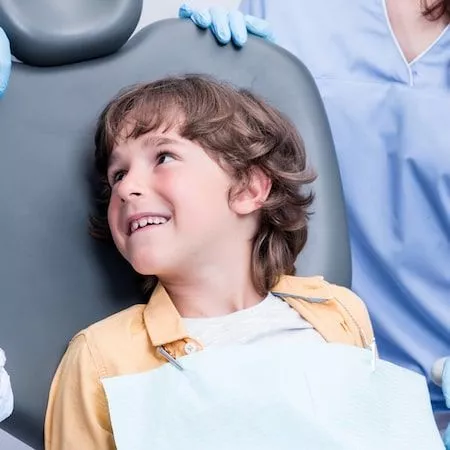
Sedation Dentistry for Kids

  | Share on Twitter Twitter | Share on Facebook Facebook | Submit to Digg digg it |  Add to delicious  delicious |  Submit to StumbleUpon StumbleUpon | Submit to Reddit reddit 

Sedation dentistry for children is needed for the following reasons:

  1. Child is afraid or uncooperative
  2. Child has many problems requiring an extended treatment time

The following options exist for sedation dentistry for children:

  1. An oral medication is given 30 minutes to an hour prior to treatment and your child will feel relaxed, forgetful, and maybe a little sleepy
  2. An anesthesiologist comes to the dentist's office and provides IV sedation
  3. Your child and the dentist go to a hospital and the dentistry is done in an operating room

Together, you and your child's dentist can decide on the most suitable form of sedation.

Many parents express concern about the safety of sedation dentistry and also the cost. First, sedation dentistry is very safe and has a long track record of safety. The cost for sedation dentistry varies depending upon the method used and the dentist. Sometimes insurance will pay for the costs of sedation dentistry. Some parents might wonder, "What's the big deal, they're just baby teeth." 

Taking care of baby teeth or primary teeth is important for the following reasons:

  1. Healthy baby teeth are needed to chew properly. Children with broken and missing baby teeth may have difficulty eating many nutritious foods, like fruits, vegetables, meats, and nuts.
  2. Cavities in baby teeth can cause pain that interferes with a good nights rest. This can lead to a child that has difficulty in school and possibly other behavioral problems.
  3. Healthy baby teeth are needed to maintain the space for permanent teeth. If baby teeth are lost too early, the space for the permanent tooth will shrink. When its time for the permanent tooth to come in there may not be room. Braces may be needed for a longer time.
  4. Cavities in baby teeth can lead to serious infections, that can even be life-threatening.

As you can hopefully see, those baby teeth are very important. Providing the necessary dental care for your child might require sedation. That's o.k. In the future,they'll be a better dental patient after a positive dental experience.

 -------

Article written by Jonathan Campbell, DDS. Dr. Campbell is a dentist in Salt Lake City who offers sedation dentistry to adults. While he really enjoys working on kids, if your child has extensive needs or requires sedation, Dr. Campbell feels these children would be best served by a pediatric dentist. If you need a referral, he'd be happy to make one.

Sedation Dentistry

  | Share on Twitter Twitter | Share on Facebook Facebook | Submit to Digg digg it |  Add to delicious  delicious |  Submit to StumbleUpon StumbleUpon | Submit to Reddit reddit 

Only 50% of adults see the dentist regularly. A large portion of those avoid regular dental care due to anxiety and fear caused by previous dental appointments. There are many things about dental care that can cause anxiety; media portrayal of dentists, sounds, smells, injections, the close proximity, etc. etc. 

Most dental offices are trying to change or have already changed that experience. Many dentists offer: televisions in the ceilings with movies and headphones, comfortable dental chairs and blankets, drills that make less sound or air abrasion or lasers that make no sound at all, aromatherapy, and new techniques to get you numb and make sure you are numb.

Even still there are many whose negative history of dental experiences need more help. There are 4 main methods of sedation that are commonly used to make dental appointments easier. They are, nitrous oxide sedation, oral conscious sedation, intravenous conscious sedation, intravenous deep sedation.

Nitrous oxide dental sedation is administered through a small mask that rests on your nose. A mixture of nitrous oxide and oxygen flows through the mask. Within minutes you feel more relaxed, time seems to pass more quickly, and you may feel warm and happy. Occasionally your arms and legs might feel heavy and toes and fingers might feel tingly. It is sometimes called "laughing gas" because of the good feelings that most experience. Following your appointment, you breathe pure oxygen for a few minutes and you are safe to drive as the "relaxing gas" takes only a few minutes to wear off. So what's the downside, if you are given too much nitrous oxide in the mixture for too long you may become nauseous. Nitrous oxide will not make you forget or fall asleep.

Oral Sedation DentistryOral conscious sedation dentistry involves the use of medications that are taken usually one hour prior to your dental appointment. You are given a ride yo your appointment. Oftentimes additional medication may be given in the office, depending upon how comfortable you are. The most commonly used medications are benzodiazepenes, like Valium, Halcion, and others. These medications are commonly used as sleeping pills and so many patients sleep through portions of their appointments.  They also cause amnesia and so many dental patients remember little if any of their dental appointment. Your pulse, blood pressure, and breathing should be monitored during the procedure. Following the procedure, your escort will drive you home and stay with you for a few hours after your procedure to make sure you recover safely.

Intravenous conscious sedation is very similar to oral conscious sedation except an IV is placed. Having an IV in place allows the sedation dentist to easily deepen the level of sedation if needed, it also allows for a more precise dosage to be administered, but otherwise the sedation effects are very similar to oral conscious sedation.

Deep intravenous sedation dentistry is usually provided by a dentist anethesiologist or an oral surgeon. This form of dental sedation results in a patient that is completely sedated. You will be asleep for the entire procedure, and you will not remember the procedure. Like conscious sedation you will need a ride to and from the appointment and someone to watch you for a few hours while you recover.

So which form of dental sedation should you choose? It depends on your level of anxiety, budget, and the dental treatment planned.

  • Do you want to be relaxed or asleep? If your answer is "asleep," deep sedation would be preferrable.
  • Is it ok if you might remember portions of your dental appointment or do you want to have no memory of your visit? If you answer is, "no memory," then deep sedation would be preferrable.
  • Deep sedation is more expensive than other forms of sedation. Dental insurance generally only covers sedation if removal of wisdom teeth are involved. So cost can become a deciding factor. Most dentists offer financing plans so that costs can be arranged to fit your budget.
  • It also may depend on what dental treatment is needed. If you need only minor care, nitrous oxide may be successful. If your needs are more complex or involve surgery, a deeper sedation may be indicated.

Together, you and your dentist, can decide on the best type of sedation dentistry for your concerns and needs. The important thing is that you know that there are alternatives to suffering with poor dental health and dental phobias. With sedation dentistry many people are now able to smile confidently and eat comfortably after years of neglect.

- - - - - - - - - -

At Legacy Dental, in Salt Lake City, Utah, the dentists offer all forms of sedation dentistry. We are always concerned about your comfort. Please comment below or call us if you have any questions about how sedation dentistry may benefit you or someone you know.


All Posts