Posted by Jonathan Campbell on Sun, Mar 14, 2010 @ 11:39 AM
Fluoride has long been a part of children's dental appointments, but did you know that the latest research suggests that it offers many benefits to adults as well?
Fluoride makes your teeth stronger. This makes them more resistant to cavities, less sensitive, and can even reverse or heal cavities that are just getting started. Fluoride also makes bacteria produce less acid. Regular applications of fluoride have shown to reduce the risk of getting a cavity by as much as 75% and can reduce sensitivity for up to 6 months.
The best way to apply fluoride is with a varnish at the dentist. Fluoride varnish is a pleasant tasting material that is painted on your teeth. It sets in seconds and there are no eating or drinking restrictions, but you are advised to wait to brush for 4 hours. Everyone can benefit from fluoride application, but adults that are at moderate risk should have fluoride applied every 6 months.
------
This article was written by Cori Skiby, RDH. Mrs. Skiby is a dental hygienist at Legacy Dental, in Salt Lake City, Utah.
Posted by Jonathan Campbell on Tue, Mar 09, 2010 @ 11:04 AM
Of concern to many denture-wearing patients lately is their denture adhesives. Many denture adhesives contain zinc. Using denture adhesives improperly, by using too much adhesive, may lead to the ingestion of excessive zinc. Excessive zinc ingestion leads to lower levels of copper in the blood which may lead to nerve and blood disorders affecting general health and well-being. The relationship between using excessive zinc-containing denture adhesive and subsequent nerve and blood disorders is not completely clear and will require more research.
Improper use of denture adhesives generally means using too much. Denture wearers commonly use too much adhesive if their dentures do not fit well. Dentures should require very little adhesive to be stable. The use of a small amount of adhesive is very unlikely to result in nerve and blood disorders as the proper amount of adhesive contains less zinc than that found in a multivitamin or in 6oz of ground beef.
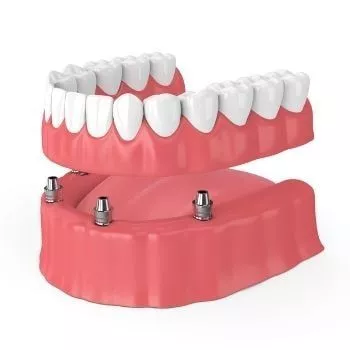
The American Dental Association has issued a statement regarding this concern. Patients who wear dentures are encouraged to see their dentist annually to screen for oral cancer and to ensure that their dentures fit properly. If you find that you must use adhesive to wear your denture comfortably, you might also consider dental implants as a means to stabilize your denture or even get rid of it all together. Until we know more, get your dentures checked for proper fit and look for a denture adhesive that does not contain zinc.
-----
Article, by Jonathan Campbell, DDS. Dr. Campbell is a dentist in Salt Lake City.
Posted by Jonathan Campbell on Sat, Jan 09, 2010 @ 04:52 PM
The grooves on teeth are often smaller than a single tooth brush bristle. Because the grooves are so small they can't be effectively kept clean and are a common place for people to develop cavities. A dental sealant is a resin (a special type of plastic) that is applied over these grooves. The dental sealant prevents food and bacteria from entering these grooves. Preventing food and bacteria from entering these grooves prevents cavities from forming. A dental sealant done well has historically been an excellent way to decrease the risk of having cavities. It does not do anything to decrease the risk of cavities from forgetting to floss.
Sealants are so effective in preventing cavities that many times they are offered at schools to children unable to see a dentist. Oftentimes these sealants are placed by dental students, or dental hygiene students, or others with less training than a dentist. There has been some concern that sealants placed by inexperienced individuals in a less than ideal setting (at school) may not lower the child's risk for cavities and may even increase their risk.
In November of 2009, the Journal of the American Dental Association published the findings of Barbara F. Gooch, DMD and others in their article "Preventing Dental Caries Through School-Based Sealant Programs."
Beginning in 2005 they looked at the dental sealants ability to help prevent cavities. In looking at 10 different studies, they found that on average cavities were reduced by 59% after more than 4 years. That's great news and supports what we had assumed. You will decrease the odds of getting a cavity in a tooth by 60% if the tooth is sealed.
But what if the sealant is not placed well? Does that increase the risk of getting a cavity? They found in looking at seven studies that teeth where a sealant was placed but then lost or partially lost were at same risk to get cavities as if a sealant were never placed. So having a sealant, even a bad one, does not increase your rate to get cavities.
So what's the takeaway message. Children's teeth should be sealed to decrease their risk for cavities and this can be done successfully in a school-based program.
Most insurance companies cover sealants on back teeth up to a certain age. There is less evidence to support the use of dental sealants in adults. However, those adults that are at high risk for cavities should probably have their molars sealed as well.
Posted by Jonathan Campbell on Sat, Jan 09, 2010 @ 04:49 PM
Wecome to our blog. Here you will find the latest news and infomation about Legacy Dental. It will also serve as a forum for education regarding the most current subjects in dentistry today. We hope to use this blog as a means to review the most common dental literature and put it into layman's terms so that our patients and others might understand what it means for them. We look forward to sharing what we learn and hearing what you'd like to know.